
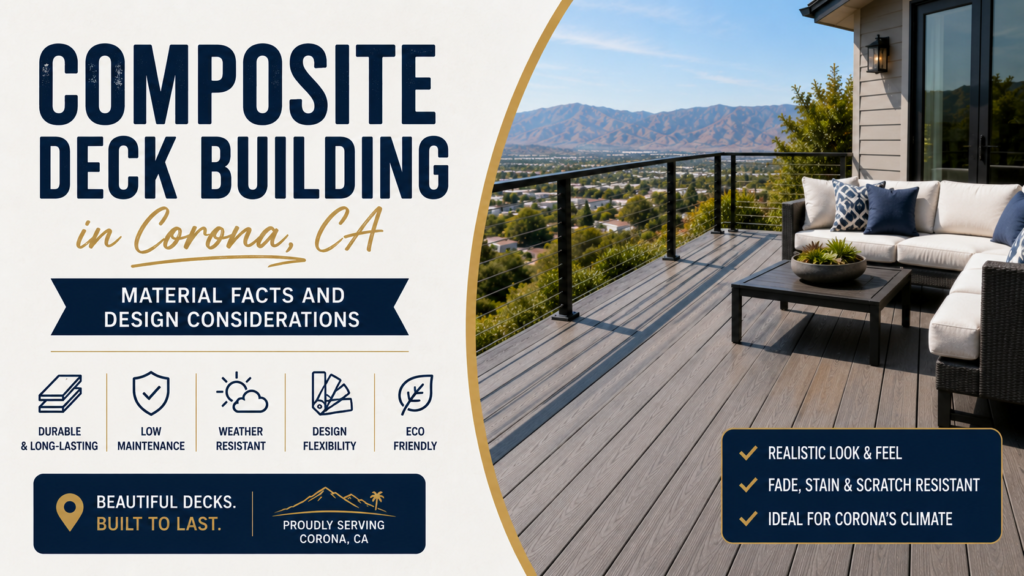
Composite decking is a manufactured building material designed to replicate the look and feel of natural wood while offering significantly improved durability and lower maintenance requirements. It is made from a blend of recycled wood fibers and plastic polymers, sometimes with a protective outer shell of PVC or similar material. This composition gives composite boards resistance to rot, insects, warping, and the kind of surface degradation that commonly affects traditional wood decks over time.
In Corona, California, where intense sun exposure, dry heat, and periodic rain create challenging conditions for outdoor building materials, composite decking has become a popular choice among homeowners seeking a long-lasting outdoor living surface. The material’s ability to resist UV fading and moisture absorption makes it particularly well-suited for Southern California’s variable climate.
Composite vs. Traditional Wood: Key Differences
Understanding how composite decking compares to natural wood helps property owners make an informed material choice. Traditional wood decks Handrails typically built with redwood, cedar, or pressure-treated lumber Handrails are valued for their natural beauty and initial cost. However, wood decks require regular maintenance including staining or sealing every one to three years, periodic inspection for rot and insect damage, and sanding to address splintering.
Composite decking largely eliminates these maintenance requirements. Most composite boards need little more than occasional cleaning with soap and water to maintain their appearance. They do not require staining, sealing, or annual refinishing. Over the long term, this reduction in maintenance can offset the higher initial material cost of composite decking compared to wood.
Composite decking is also generally safer underfoot. The slip-resistant texture of many composite boards reduces the hazard of wet surfaces, and because composite materials do not splinter, they are safer for bare feet Handrails a notable advantage for families with children.
Design Options with Composite Decking
One of the compelling aspects of composite decking for homeowners in Corona is the broad range of design options it provides. Modern composite products are available in a wide array of colors, from natural wood tones like cedar, redwood, and tropical hardwood to more contemporary gray and charcoal palettes. Many manufacturers produce multiple finish textures, including smooth, wire-brushed, and embossed wood grain patterns, providing a realistic wood appearance without the material’s inherent vulnerabilities.
Custom deck designs can incorporate multi-level layouts, built-in seating, integrated lighting, pergola structures, and a variety of railing systems. Composite decking pairs well with aluminum, cable, and glass railing systems, allowing for cohesive modern aesthetics. A skilled Composite Deck builder Corona can also design the deck to integrate seamlessly with the home’s architecture and outdoor living space, maximizing both function and visual appeal.
Environmental Considerations
Many composite decking products are manufactured using a significant proportion of recycled materials, including reclaimed wood fibers and post-consumer plastic. Brands such as Trex, for example, produce boards made from a high percentage of recycled content, reducing the demand for virgin timber and diverting plastic waste from landfills.
For environmentally conscious homeowners in Corona, choosing composite decking can be one element of a broader commitment to sustainable building practices. The material’s longevity also contributes to its environmental profile: a deck that lasts decades without replacement requires fewer resources over its lifetime than one that needs periodic rebuilding or major repairs.
The Importance of Professional Installation
Composite decking manufacturers publish specific installation guidelines that must be followed to ensure the material performs as intended and to maintain warranty coverage. These guidelines address board spacing for drainage and expansion, fastener types, framing requirements, and ventilation beneath the deck surface. Improper installation can lead to buckling, excessive heat retention, or structural issues that void the product warranty.
An experienced composite deck builder in Corona understands these installation requirements and has the tools and techniques to execute them correctly. Professional builders can also assist with the permitting process, as most deck construction projects in California require a building permit, and ensure that the final structure meets the California Residential Code requirements for load capacity, railing height, and structural design.