Queue Management System in Saudi Arabia: A 2026 Buyer’s Guide
Long waiting lines quietly damage reputations. In clinics, banks, and government service centres across the Kingdom, a slow line tells customers their time does not matter. That is exactly why a modern queue management system in Saudi Arabia has shifted from a nice-to-have to a core operational tool in 2026. It replaces chaotic crowds with orderly, measurable, and far more pleasant service journeys.
This guide breaks down how these systems work, what features matter most for Saudi organisations, and how to pick hardware and software that actually reduce wait times rather than simply tracking them.
What a Queue Management System Actually Does
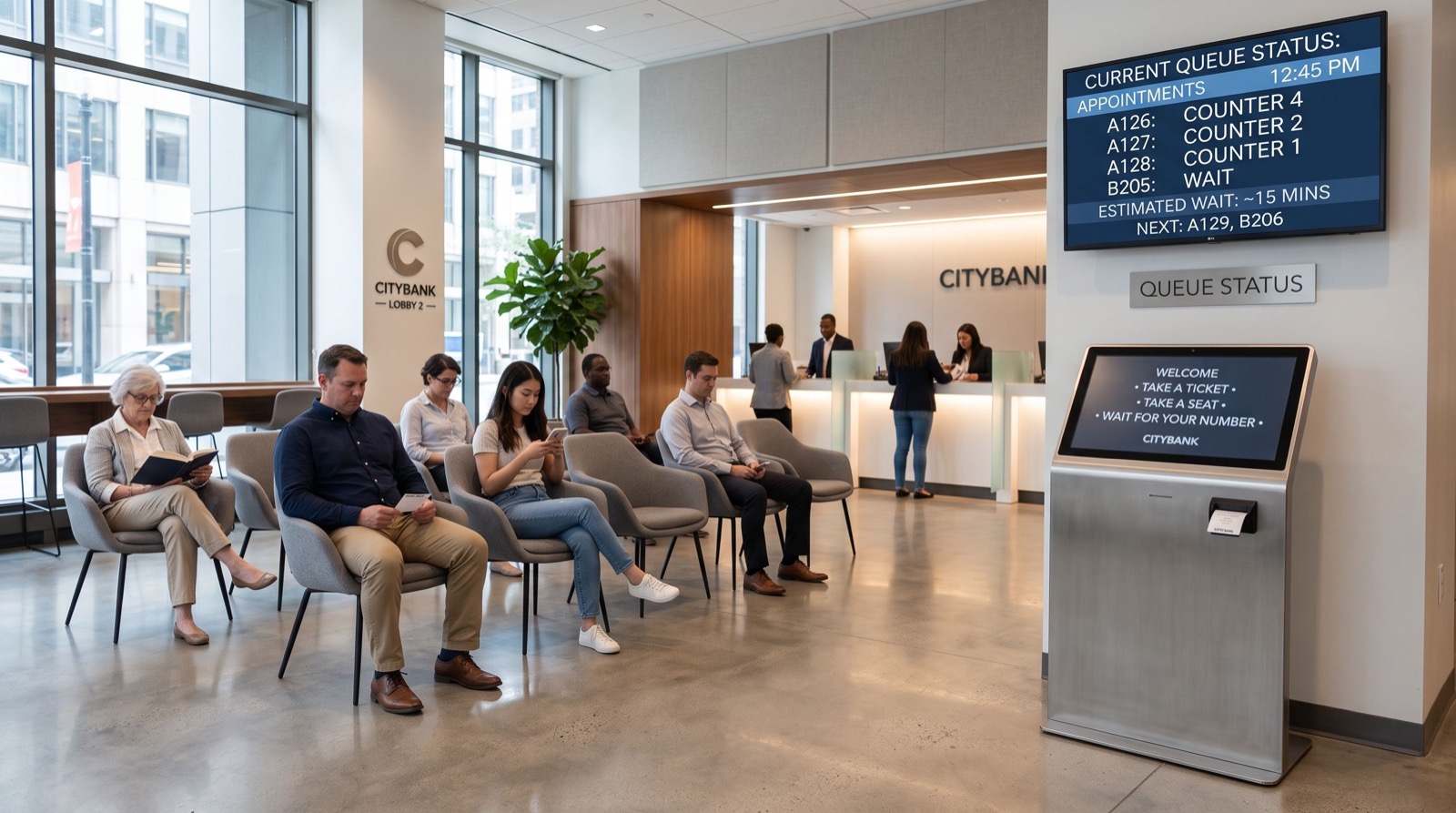
At its simplest, a queue management platform issues a ticket, assigns the visitor to the right counter, and calls them when an agent is free. Behind that simple experience sits a layer of routing logic, real-time dashboards, and analytics that managers use to spot bottlenecks.
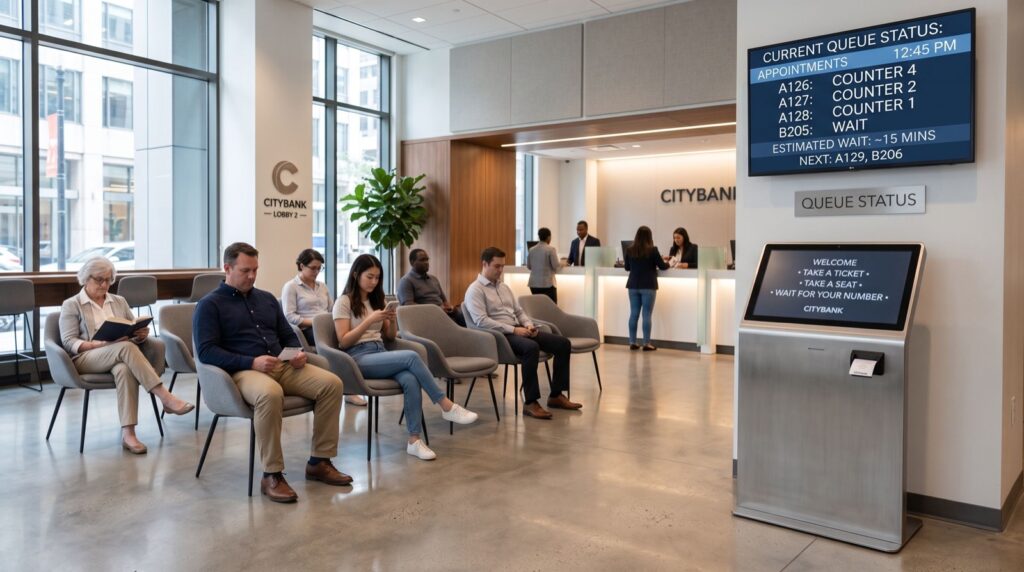
Most deployments combine four elements: a self-service kiosk or mobile check-in, a digital signage display, a counter-side calling application, and a reporting portal. When these parts talk to each other, a branch can serve more people with the same staff.
- Ticketing kiosk: prints or sends a digital token with an estimated wait.
- Display screens: show the now-serving number and counter.
- Agent console: lets staff call, recall, transfer, or pause tickets.
- Analytics dashboard: tracks service time, wait time, and no-shows.
Why Demand Is Rising in the Kingdom
Saudi Arabia’s service sector is expanding quickly under Vision 2030, and citizen-experience standards have climbed with it. Public-facing bodies are measured on satisfaction, and private healthcare and retail groups compete directly on convenience.
Arabic-English bilingual interfaces, SMS appointment reminders, and virtual queuing from a phone are now expected rather than premium extras. A dependable deployment also supports the Kingdom’s digital-government goals, which are documented in the national digital agenda published by the Saudi Digital Government Authority.
Organisations that want this done properly usually bring in a specialist integrator. A good partner, such as the queue management system in saudi arabia team, handles site surveys, Arabic localisation, and the network wiring most in-house IT teams would rather not touch.
How Does Hardware Affect Queue Performance?
Software gets the attention, but hardware decides whether the experience feels fast or frustrating. Kiosks must be rugged, touchscreens responsive, and any scanning component accurate on the first pass. When a counter uses barcode or ID scanning to pull up a visitor record, the scanner’s read speed directly shortens service time.
For ID cards, appointment barcodes, and mobile tickets shown on a phone screen, an area-imaging scanner is ideal. The Honeywell Vuquest 3320g is a popular choice because it reads both printed and on-screen codes reliably, which matters when half your visitors arrive with a digital token.
Matching the Scanner to the Counter
A hands-free presentation scanner suits high-traffic desks where staff process a visitor every minute or two. Agents simply present the ticket to the imager rather than aiming a gun, which keeps the line moving and reduces repetitive strain over a long shift.
Comparing Queue System Deployment Models
Before buying, decide how the system should be hosted and scaled. The table below compares the three models most Saudi organisations evaluate in 2026.
| Model | Best For | Upfront Cost | Scalability |
|---|---|---|---|
| On-premise | Banks, government, data-sensitive sites | High | Moderate |
| Cloud / SaaS | Retail chains, clinics, multi-branch | Low | High |
| Hybrid | Enterprises with mixed compliance needs | Medium | High |
Key Features to Shortlist
Not every feature earns its licence fee. Focus on the capabilities that move your core metric, which is almost always total visitor wait time. The following list reflects what consistently delivers value in Saudi branches.
- Virtual queuing: let visitors join remotely and arrive near their turn.
- Appointment booking: blend walk-ins and scheduled visits on one timeline.
- Priority routing: fast-track VIPs, elderly, or urgent cases.
- Multilingual UI: seamless Arabic and English switching.
- Live analytics: SLA alerts the moment a queue exceeds a threshold.
When you evaluate vendors, ask to see a live dashboard rather than a slide. Teams that work with dependable specialists on both technology and customer-experience strategy tend to get more usable deployments than those who buy hardware alone.
A Practical Tip From the Field
Pilot the system in your busiest branch, not your quietest. Peak-hour data exposes routing flaws that a calm morning will hide, and it gives staff realistic training before a wider rollout. Fix the hard case first and the easy branches follow effortlessly.
Measuring Return on Investment
ROI shows up in three places: shorter average wait, higher counter throughput, and fewer abandoned visits. A mid-sized clinic that cuts average wait from eighteen minutes to seven often recovers the system cost within a single year through retained patients and lighter staffing pressure.
Track a baseline for two weeks before go-live so the improvement is provable. Hard numbers also make it easier to justify expanding the queue management system in Saudi Arabia to additional branches later.
Security, Compliance, and Data Residency
Visitor data is sensitive, especially in healthcare and government settings. A compliant deployment encrypts personal information in transit and at rest, and it logs who accessed each record. For public bodies, keeping data inside the Kingdom is often a procurement requirement rather than a preference.
On-premise and hybrid models give security teams tighter control over residency, while reputable cloud vendors now offer in-region hosting to meet the same standard. Ask every vendor to document retention periods, access controls, and breach-notification procedures before you sign.
Role-based permissions matter too. Front-desk agents should see only what they need to serve the next visitor, while supervisors get the analytics view. This separation protects privacy and keeps the dashboard uncluttered for each user.
Frequently Asked Questions
How much does a queue management system in Saudi Arabia cost?
Entry cloud setups for a single branch can start modestly per month, while enterprise on-premise deployments with kiosks and signage run higher. Pricing depends on counters, kiosks, and integration scope, so request a scoped quote rather than a list price.
Can it integrate with our existing CRM or ERP?
Yes. Most modern platforms expose APIs that connect to CRM, hospital information systems, and ERP tools so visitor data flows automatically into the records your staff already use.
Does it support Arabic and English?
Reputable systems ship with full bilingual interfaces for kiosks, screens, SMS, and dashboards, which is essential for both citizen services and mixed-language workforces in the Kingdom.
How long does installation take?
A single-branch cloud rollout can go live within days, while multi-site on-premise projects with custom routing may take several weeks including staff training and testing.
Final Thoughts
A well-chosen queue management system in Saudi Arabia turns waiting from a liability into a controlled, measurable part of your service. Pair reliable hardware with analytics-driven software, pilot it where the pressure is highest, and the gains in satisfaction and throughput follow. In 2026, that combination is what separates a modern service centre from a frustrating one.